Short answer
El-Sultan Web is a founder-led web development practice in Brussels, run by Abed El-Sultan. It builds business websites and custom web applications — payments, bookings, portals and admin back-offices — in English, French, Dutch and Arabic with right-to-left support, for clients across the Brussels-Capital Region, Belgium and the wider European Union.
One accountable builder, not an account manager
Most Brussels web agencies place a project manager between you and whoever writes the code. Here there is one person: the same person scopes the work, builds it, tests it, deploys it and answers the phone afterwards. Nothing is briefed down a chain and nothing is subcontracted without being named.
The trade-off is honest. A solo practice has no bench to surge onto a rush, and it says so before a project starts rather than after. What it does have is AI-accelerated engineering, which is what makes a donation platform or a trilingual restaurant site economical at this size.
Four languages, including Arabic right-to-left
Brussels is a bilingual region inside a trilingual country, and its businesses serve communities in more languages than that. Sites here ship in English, French, Dutch and Arabic, with proper locale routing, hreflang alternates and full right-to-left layout where a language needs it — not a translation widget bolted onto an English site.
Arabic is the part most suppliers quietly decline. Right-to-left is a layout problem, not a text problem: mirrored navigation, correct logical properties, numerals, form fields and icons. Three live client platforms run it in production.
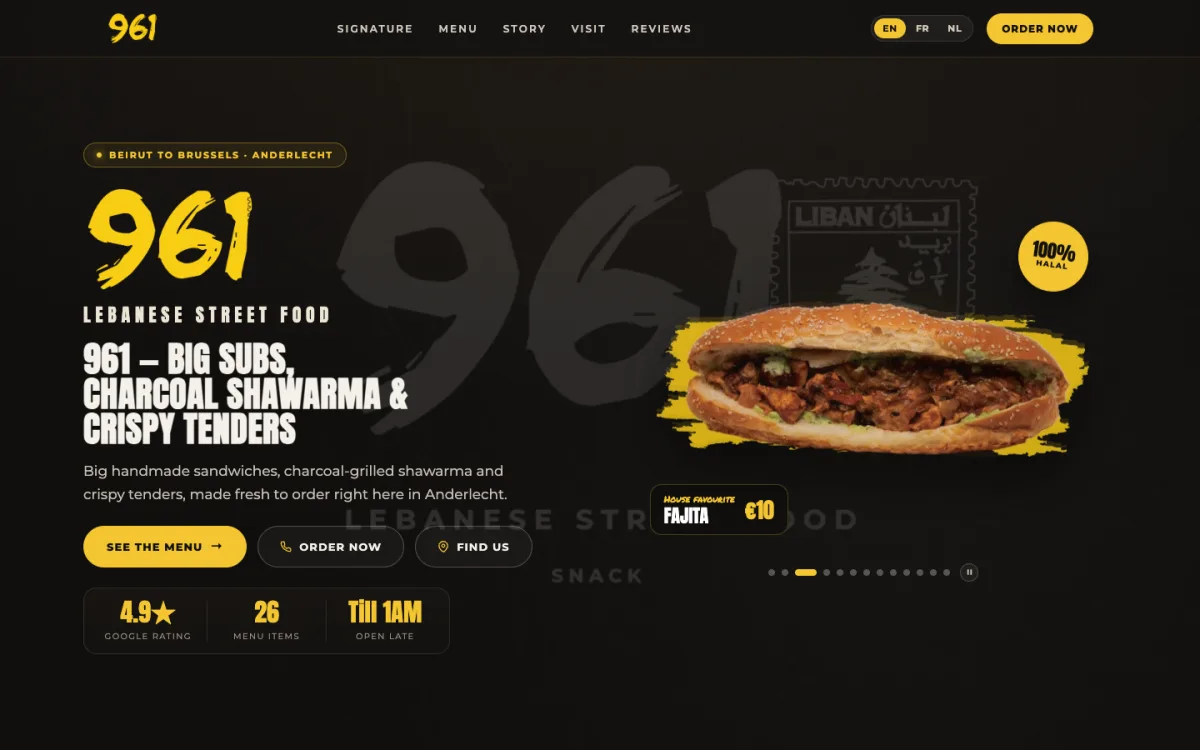
- 961.be — a Lebanese restaurant in Anderlecht, in English, French and Dutch with a structured JSON-LD menu
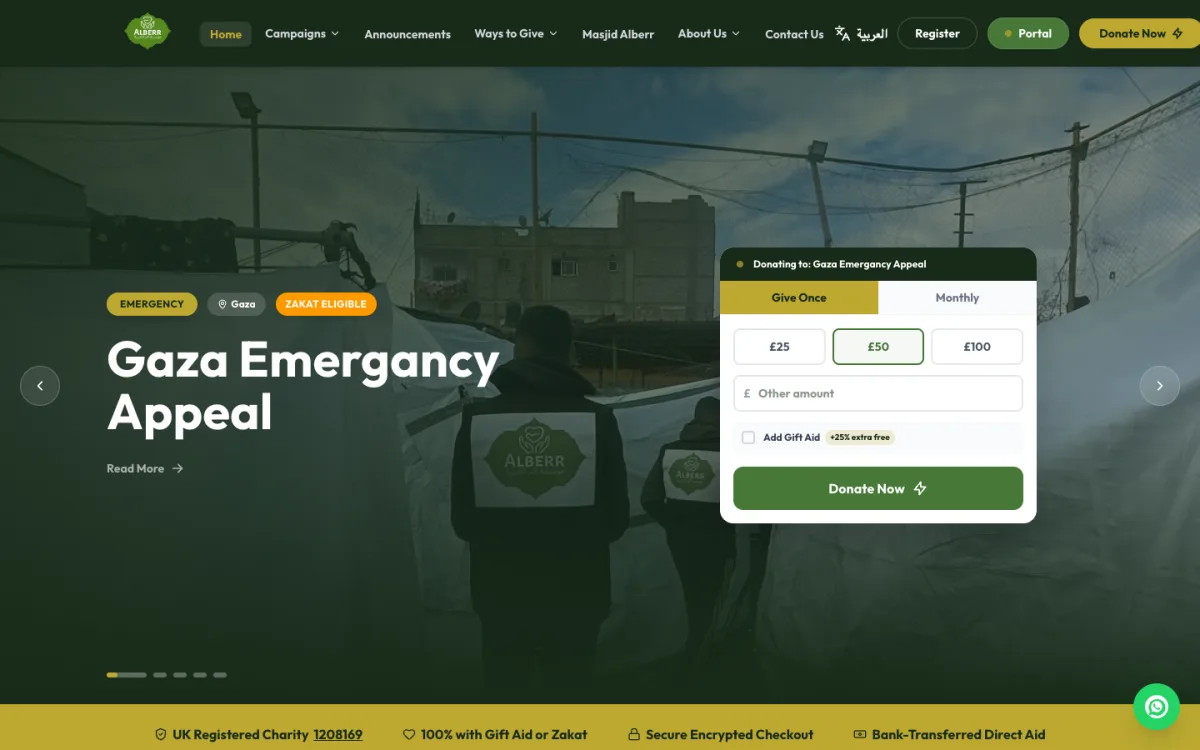
- alberr.org — a charity giving platform in English and Arabic, right-to-left throughout
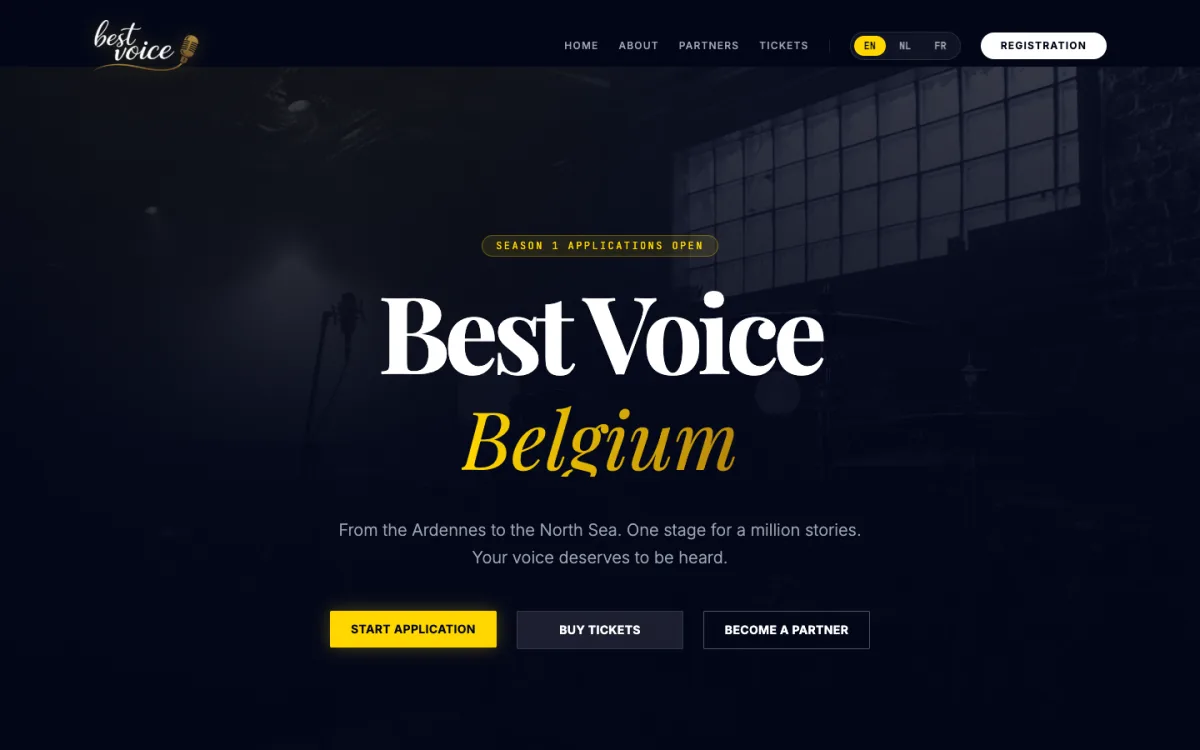
- bestvoicebelgium.be — a singing competition with English, Dutch and French locale routing and Stripe ticketing
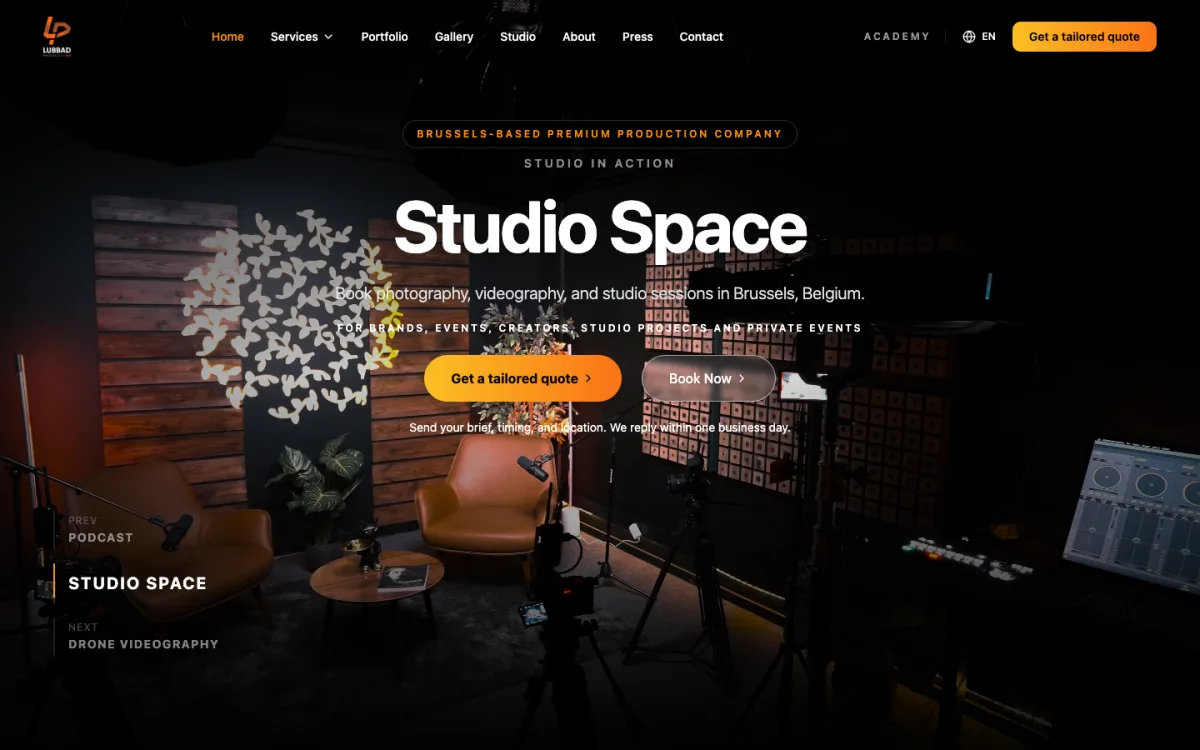
- lubbadproduction.com — three products on one platform in English, French, Dutch and Arabic
Working across the Brussels-Capital Region and beyond
Clients sit across the nineteen communes and well outside them. Work happens remotely by default, with meetings in person in Brussels where a project genuinely benefits from being in the room — a launch review, a handover, a first conversation about a platform.
Nothing about the delivery depends on proximity. Staging links, recorded walkthroughs and written scopes mean a client in Ghent, Antwerp or Liège sees exactly what a client in Ixelles sees.